
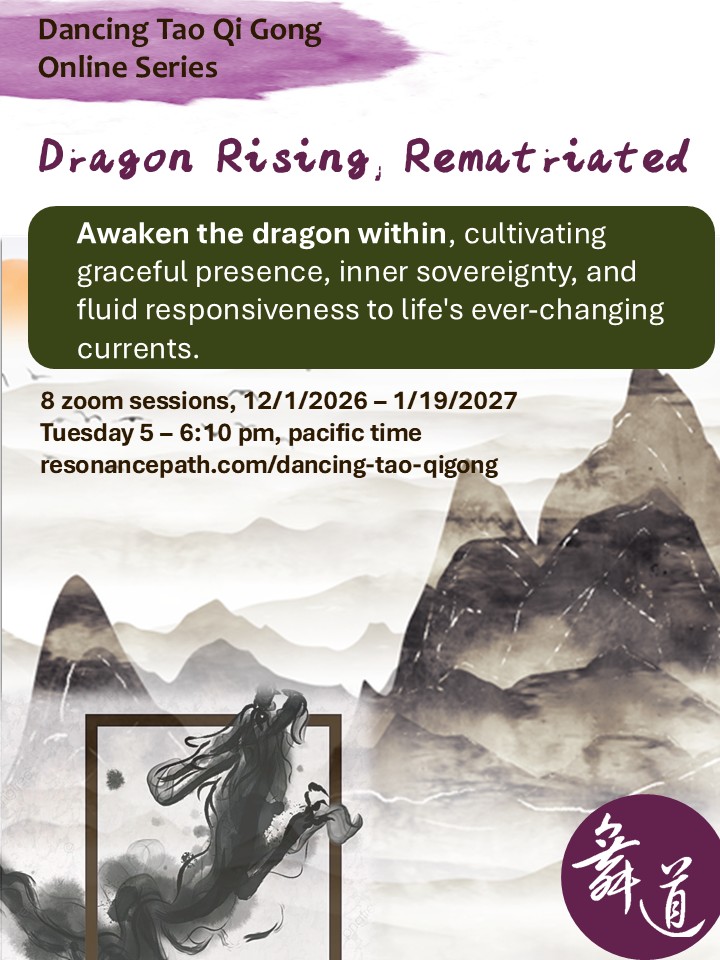
You are invited to join the online Qigong series!
What People Say about Dancing Tao Qigong

“Spring’s teaching clearly comes from her heart and from her deep passion for the spiritual principles underlying Qigong and Tai Chi.”
“Dancing Tao provides the structural and cultural context for Qigong, which makes the movements much more meaningful.”
“I appreciate that Spring’s Qigong teaching creates spaciousness for spontaneous movement, helping me become more attuned to my own qi. The sensation of qi is palpable!”
“The practice brings more centeredness and spaciousness into my daily life. This energy also touches people and the environment around me!“
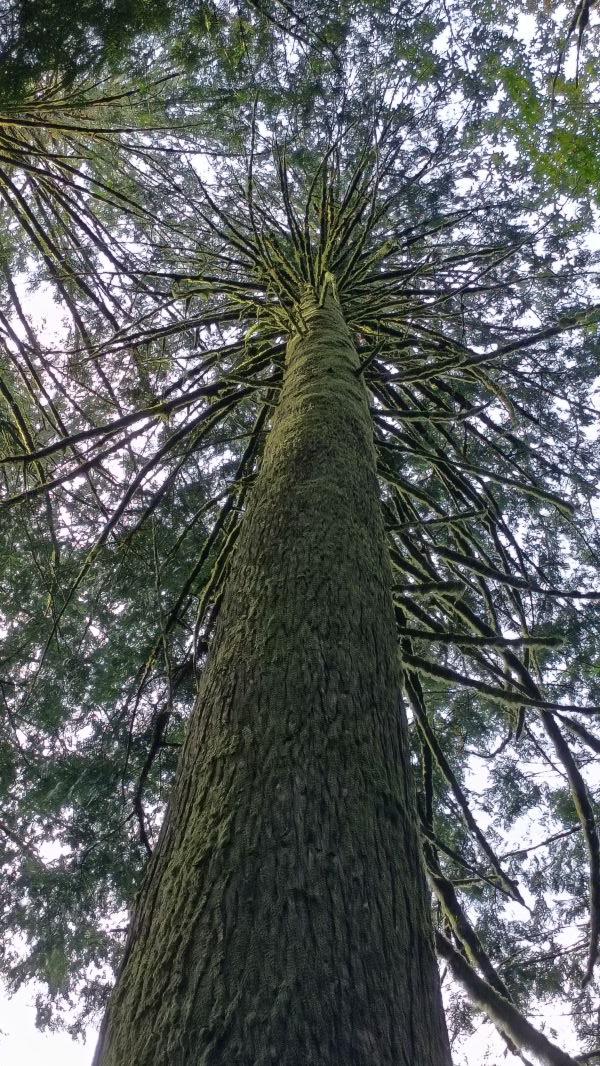
In this series, you will learn qigong practices that awaken vitality and fluidity along the spine, including the ancient practice of Swimming Dragon.
In Chinese medicine and Taoist traditions, two of the most vital energy pathways are the Du Mai 督脉 (Governing Vessel), which ascends along the spine, and the Ren Mai 任脉 (Conception Vessel), which flows along the front of the body. Together, they form a continuous circuit connecting our embodied vitality with our spiritual awareness.
As qi flows freely through these two vessels, we awaken a deeper alignment between the instinctual wisdom of our animal body and the unfolding destiny of our spirit. This dynamic union is embodied in the ancient symbol of the dragon—a creature of both earthly power and celestial mystery.
To awaken the dragon within is to cultivate a way of moving through the world with grace and dignity, rooted in our sovereignty yet fluid and responsive to the ever-changing currents of life.
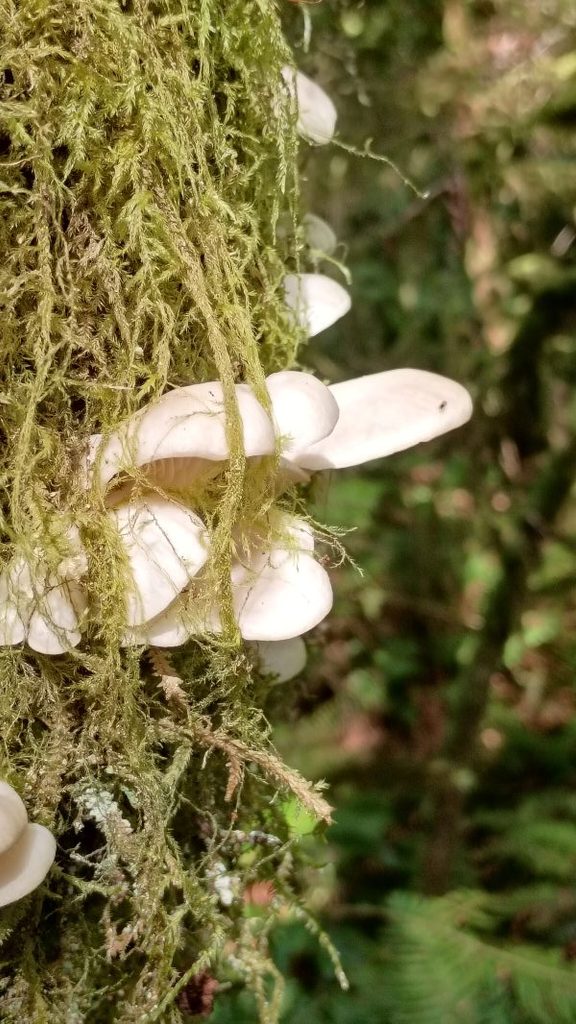
In modern life, many forces disrupt the natural alignment between our animal instincts and spiritual purpose. Cultural conditioning often imprints fear, shame, and inhibition upon our instinctual nature, teaching us to suppress rather than trust the wisdom of our bodies. Sedentary lifestyles, excessive mental activity, and unhealthy diets can further contribute to stagnation, especially in the lower body, diminishing our sense of vitality and embodied connection.
This qigong series draws from the ancient practice of 游龙功 (Swimming Dragon), weaving its fluid, spiraling movements with contemporary movement practices and improvisational play. Through these explorations, we invite the body to release habitual restrictions, rediscover its innate creative expression, and rematriate our animal wisdom—restoring our connection to the primordial, life-giving intelligence of the body and its deep belonging within the living Earth.
First 45 minutes – movement and meditation practice
Next 25 minutes – discussion: the cultural and metaphysical context of the movement, and how to integrate the practice into daily life.
Video recording is available after each session. Offline discussion is available through Signal thread.
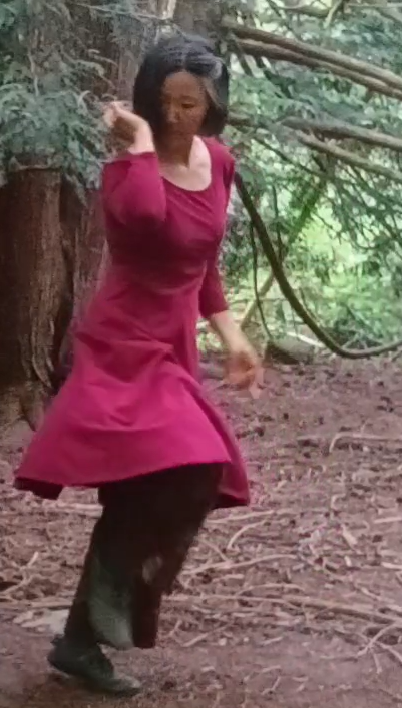
What is Dancing Tao?
The name Dancing Tao points to an ancient way of knowing through the body. In early Chinese culture, the character 舞 (wǔ), “dance,” is closely associated with 巫 (wū), the ritual practitioner or shaman, whose knowledge arose not only through thought, but through intuition, sensation, spontaneity, and raw experience with the living world.
Across many ancient cultures, dance was not primarily performance; it was a way of entering into communion with forces beyond the individual, into the collective and natural world.
Dancing Tao Qigong brings this embodied way of knowing into a contemporary practice. Drawing from her lineage and lifelong exploration of Qigong, Tai Chi, dance, and movement, Spring invites practitioners to experience the body not simply as something to strengthen or regulate, but as a sensitive vessel of perception, relationship, and wisdom.
Dancing Tao cultivates our capacity to listen inwardly, sense the movement of qi, and rediscover the body as a sacred participant in the larger flow of life.
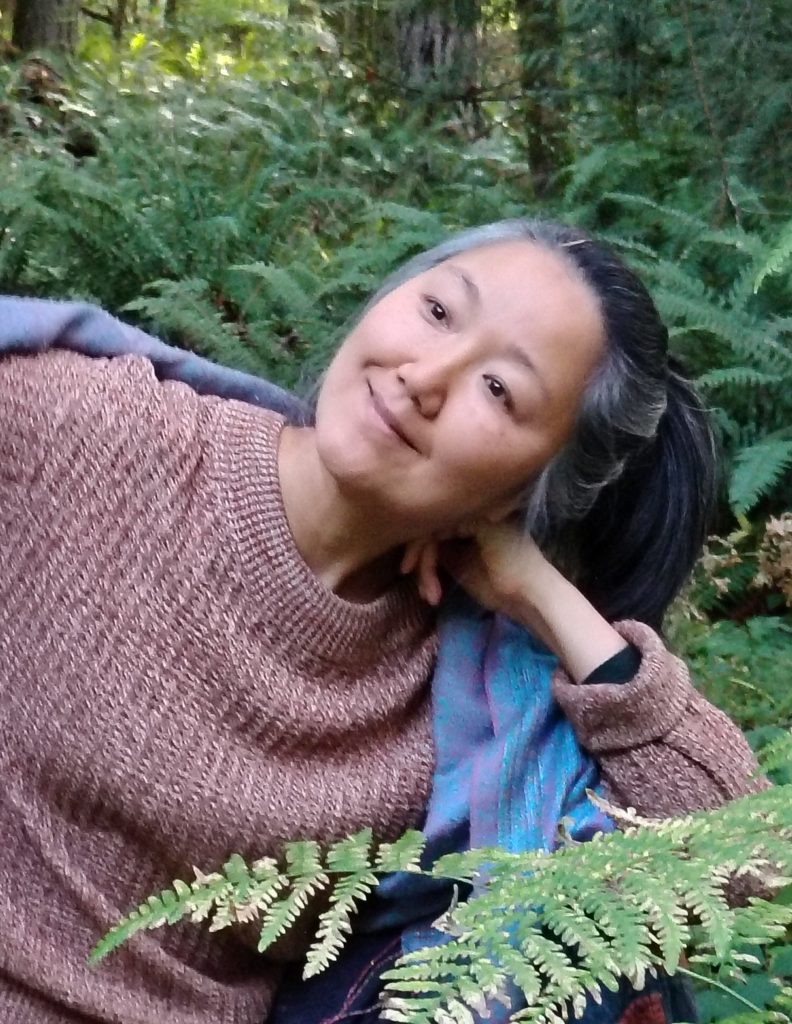
Spring Cheng, PhD, LAc, is co-founder of Dancing Tao Tai Chi, as well as an artist, author, licensed acupuncturist, and guide for inner transformation. Raised in traditional, pre-industrialized China and later educated in the United States, she holds a doctorate in molecular biology and a master’s degree in acupuncture and east asian medicine.
Her work brings together Taoist philosophy, Qigong and Tai Chi, artistic expression, scientific inquiry, and psycho-spiritual healing, inviting participants to cultivate greater trust in the body and a deeper sense of connection with the living world.
Spring is the author of Resonance Code: Empowering Leaders to Evolve Toward Wholeness. She is a musician whose compositions draw upon ancient Chinese poetry. Her work is inspired by a vision of culture rooted in interconnectedness, harmony, beauty, and the inherent wisdom of life.
Sliding scale: $96 – $144. Pay what feels right.